
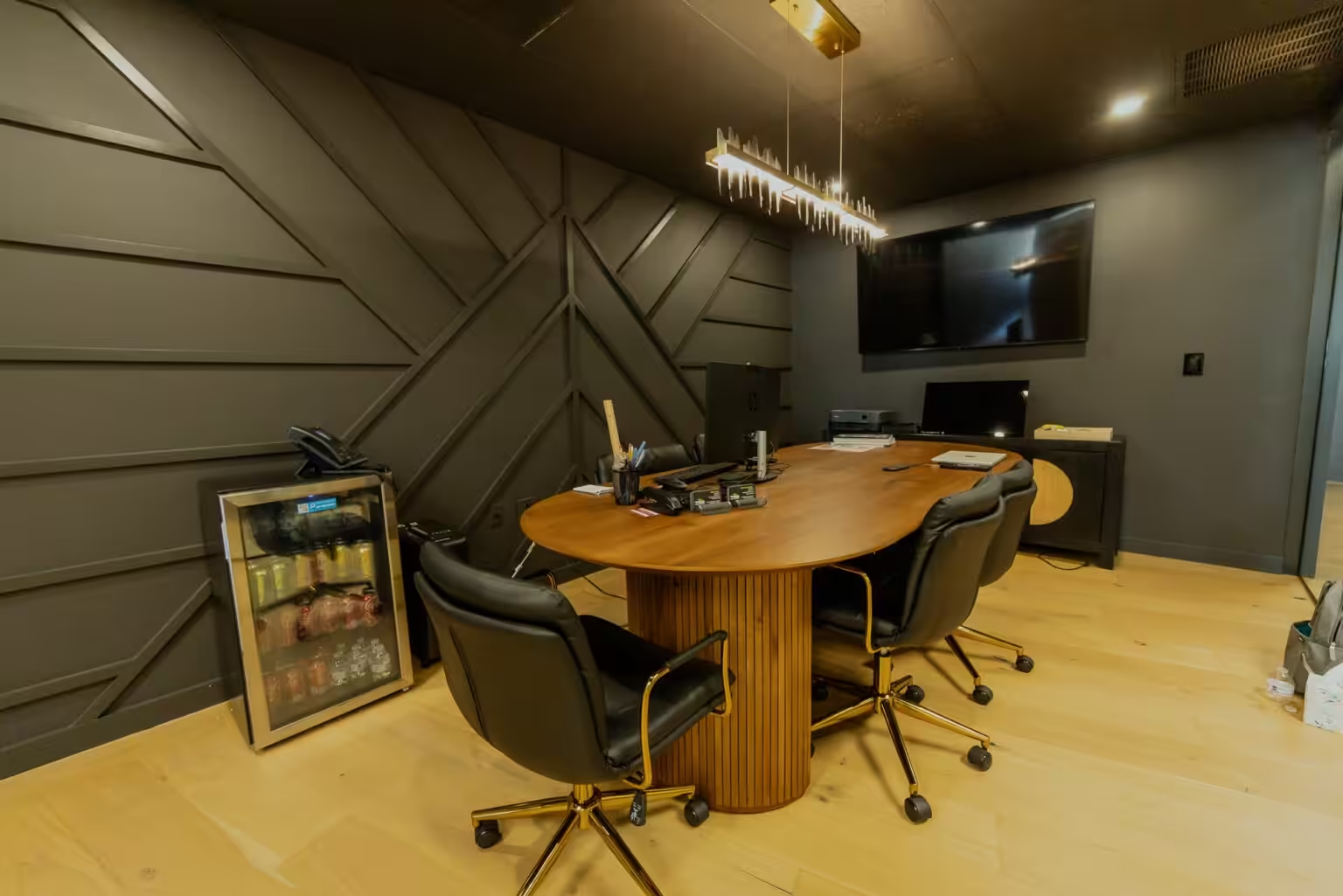
Light flooring makes a room look brighter and hides the pale dust, sand and pet hair every house collects. Dark flooring looks richer and anchors a big room, but it shows that same pale dust sooner.
Neither is tougher than the other: within a collection we sell, the light and dark colors share the same wear layer, core, installation methods and warranty.
That leaves four things to decide by: how much daylight the room gets, what color your everyday dirt is, how much sun lands on the floor, and what the walls and cabinets will be. The table near the end turns those into a pick.
If you are still choosing the material itself, start with our guide on how to choose flooring and come back for the color.
Same collection, Light and Dark labels: what actually differs
Veranda labels every color in its Charleston collection Light, Medium or Dark on our product pages, which makes it a clean test. Put Sea Oats, labeled Light, next to Sweet Tea, labeled Dark, and read the spec lines:
| Spec on the product page | Sea Oats (Light) | Sweet Tea (Dark) |
|---|---|---|
| Wood and style | French oak, smoked and fumed, wire-brushed | Same |
| Plank size | 8″ wide, 75″ random lengths, 9/16″ thick | Same |
| Wear layer | 4 mm | Same |
| Finish | High penetrative transparent base, oil look | Same |
| Installation | Float, glue or staple; above, at or below ground level | Same |
| Warranty | 50-year residential, 5-year commercial | Same |
| Coverage per carton | 25.07 sq ft | 24.41 sq ft |
On paper, the color label and a fraction of a square foot per carton are the only differences. Tone is a look decision, not a durability decision, at least inside one line.
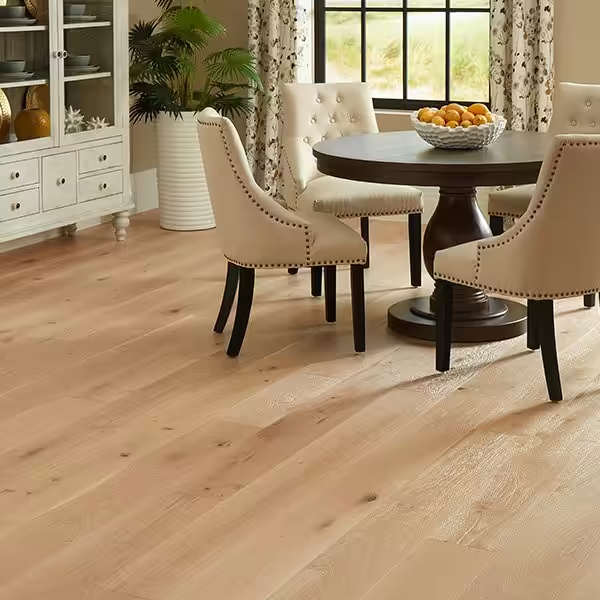
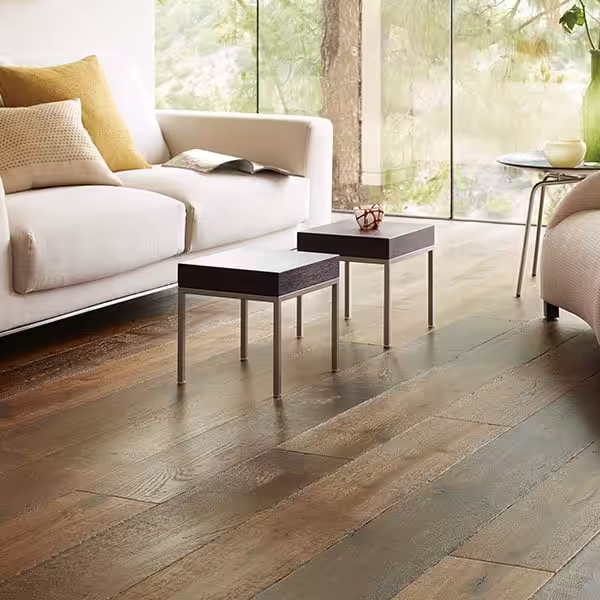
Across the 21 Veranda colors on our site, the maker labels 13 Light, 6 Medium and only 2 Dark: Sweet Tea and Battery. That is a count of what Veranda offers, not of what sells, but it shows where most of the choice sits.
It also means tone is not what sets a quote. The collection, width, veneer thickness, finish and square footage do, so two colors from the same line come down to taste.
Light vs dark, side by side
Most of the trade-offs come down to contrast and reflected light, so the comparison is short:
| Light floor | Dark floor | |
|---|---|---|
| Room brightness | Sends more daylight back into the room, so a small or north-facing room feels more open | Absorbs more of it; grounds a large, bright room, can feel heavy in a dim one |
| What shows between cleanings | Dark crumbs, mud and black pet hair | Pale dust, lint, beach sand and light pet hair |
| Glare and surface marks | Decided more by sheen than by tone (next section) | |
| Sun exposure | Both change color under light; the outline of a rug or sofa is what you notice | |
| Stairs, trim and moldings | Both need moldings that blend; Denali tells installers to pick boards that ease into the molding’s tone | |
Much of what settles on a floor between cleanings is pale: dust, lint and, close to the coast, the sand that rides in on shoes. A floor near that color simply has less contrast with it.
Sheen matters as much as tone, and nearly everything we carry is matte
Glare is what turns a film of dust or a fine scratch into something you see from across the room. Denali’s installation guidelines point out that small surface bumps become most visible when natural or artificial light reflects across the floor. A lower sheen reflects less of that light, whatever the color.
Here is what the product pages for the engineered hardwood we carry in North Charleston and Richmond, and for our laminate and vinyl, state about sheen:
- Denali: ultra-matte on nearly every color, most of them wire-brushed.
- Symphony: brushed matte, rated at a 5% to 7% gloss level.
- Aged Wide Floors: matte sheen; several collections specify a Bona finish rated 16 at a 60° gloss reading.
- Chesapeake engineered: matte on Cromwell and Points East, low gloss on Chemistry.
- Chesapeake laminate, All American Premium and Fusion Design XL: low gloss.
- Veranda: ultra-low gloss on Asheville, an oil look on Charleston. Hallmark’s Ventura and Alta Vista carry its Nu Oil finish.
- Belocore SPC vinyl: matte finish.
None of the lines that state a sheen on our pages is high gloss. If you love a dark floor, picking it in one of these finishes already removes part of the glare problem, and wire-brushed texture adds its own variation to the surface.
Sun changes every floor’s color, light or dark
Choosing a tone won’t let you skip window coverings. The manufacturers behind our floors say plainly that their products react to light:
- According to Denali’s guidelines, all of its products change color over time, and the degree depends on the amount of UV exposure.
- Hallmark’s warranty says color changes come from UV in sunlight and also from fluorescent, LED and incandescent bulbs. Window coverings, UV-resistant tint and solar screens can reduce the change but not eliminate it, and the reaction varies by color and species.
- Chesapeake’s Points East guide says UV softens the tone of different species to varying degrees and asks owners to rearrange rugs and furniture so the floor ages evenly. Its engineered warranty excludes natural color change from light, and its installation guide asks you to wait two weeks before laying area rugs on a new floor.
- Vinyl and laminate are not exempt. PermShield’s manual warns that prolonged direct sun can discolor its SPC planks and requires drapes or blinds during peak sun hours; Chesapeake’s laminate guidelines ask for curtains, blinds or solar film.
What you notice later is the line between exposed and covered floor. Plan window treatments for sunny rooms with either tone, and shift rugs and furniture now and then.
Which tone for which room
Find the row that describes your room:
| If the room… | Lean toward | Why |
|---|---|---|
| Is small, has few windows or faces north | Light or medium | Returns more of the little daylight it gets |
| Is large and open, with a lot of glass | Any tone; dark grounds it | Light is plentiful; plan window coverings either way |
| Has charcoal, navy or dark-stained walls or cabinets | Light or medium | Keeps the floor from merging with the walls |
| Takes beach sand, pale dust or light pet hair | Light or medium | The debris matches the floor |
| Is home to a dark-coated dog | Medium to dark | Black hair stands out on pale boards |
| Must meet existing wood, stairs or trim | The existing tone | A near-miss reads as a mistake at every threshold |
The same logic holds for vinyl plank. Our SPC vinyl plank colors run from Rustic White and Beach Beige to French Roast and Coal Expresso, and the printed color sits under the same clear wear layer either way, so the choice is about light, dirt and contrast, as above.
Three checks before you commit
- Live with two samples. Lay a light and a darker sample where the afternoon sun lands and where people come in from outside, and look at them morning and night for a few days.
- Keep the color consistent. Denali allows up to 5% difference in color tone between production runs and recommends installing from three to five boxes at once; Chesapeake asks installers to work from several cartons and, on laminate, to check that the lot numbers match. Approve the tone on a sample before the first row goes down, as Denali requires.
- Need a color no one stocks? An unfinished plank is stained in the room after installation; we compare that route in prefinished vs. unfinished hardwood.
One more test, and the simplest: hold a cabinet door or a paint chip against engineered hardwood colors labeled Light, Medium and Dark. Next to the real thing, one of the two usually stops looking right.
0 Comments