

The best flooring for flood-prone areas is a floor that can be soaked and dried without being ruined, which FEMA calls flood damage-resistant.
Its Technical Bulletin 2 (January 2025) rates mortar-set ceramic or porcelain tile, terrazzo, poured epoxy floors and homogeneous vinyl or rubber set in chemical-set adhesive as acceptable. Carpet, laminate, and engineered or solid wood are rated unacceptable.
None of the floors we sell is on that acceptable list, and we would rather say so up front.
Where your project isn’t held to FEMA’s rule, rigid-core SPC vinyl plank is the most water-tolerant floor we carry: water on top doesn’t hurt the plank, and a floating install comes apart so the slab underneath can dry. It is still not flood-proof, and its warranty excludes floods.
The Atlantic hurricane season runs from June 1 through November 30, according to NOAA’s National Hurricane Center. Below are the questions people actually ask, answered from FEMA’s guidance and the documents behind the products.
Is waterproof flooring flood-proof?
No: on the floors we sell, “waterproof” is a promise about water on top of the floor. PermShield warrants its vinyl as waterproof from topical moisture and says the plank’s structure won’t be significantly diminished by it. The same warranty states that luxury vinyl plank is not a moisture barrier.
It also excludes damage from floods, standing water, appliance failure, plumbing leaks and anything else that puts water under the flooring, along with casualty events normally covered by homeowners’ insurance. Chesapeake’s laminate warranty works the same way: it covers topical spills cleaned up within 24 hours and excludes floods, plumbing or appliance leaks and standing water.
The label still matters day to day: the waterproof flooring we carry in North Charleston is built for spills, pet accidents and wet shoes. It just isn’t flood protection. Our guide to waterproof vs. water-resistant flooring shows what each claim covers.
What FEMA rates as flood damage-resistant flooring
Table 2 of FEMA’s bulletin rates finish materials as acceptable or unacceptable below the base flood elevation in flood hazard areas. For floors, it reads like this:
| Rated acceptable | Rated unacceptable |
|---|---|
| Ceramic and porcelain tile set in mortar | Ceramic and porcelain tile set with organic adhesives |
| Concrete tile set in mortar; terrazzo | Carpeting; linoleum |
| Formed-in-place epoxy, polyurethane, mastic and silicone floors | Engineered wood flooring, plastic laminate flooring and solid wood |
| Homogeneous vinyl sheets or tiles, and rubber sheets or tiles, set in chemical-set adhesives (such as epoxy-polyamide or latex-hydraulic cement) | Vinyl sheets or tiles in all other applications, including vinyl on cork or wood backings |
Floating SPC vinyl with an attached foam pad is not listed. The nearest entry, vinyl sheets or tiles, is acceptable only as homogeneous vinyl set in chemical-set adhesive, so a floating plank doesn’t fit it. FEMA points to ASTM E3369 for rating products that aren’t in the tables.
The bulletin adds two cautions that matter at home.
- Combinations of materials that trap water or keep a floor from drying can perform unacceptably: glued vinyl that is acceptable over concrete is not acceptable over plywood, because it has to come up for the plywood to dry.
- NFIP flood insurance won’t pay claims for finish materials in basements, or below the lowest floor of a post-FIRM elevated building in most flood hazard areas, even when those materials are rated acceptable.
Which rules apply if your home is in a flood zone?
Start with the map. FEMA’s Flood Map Service Center is the official place to find your community’s flood map.
A Special Flood Hazard Area is the land shown on those maps as zones such as A, AE, V or VE; it is where the National Flood Insurance Program’s floodplain rules must be enforced and where the mandatory purchase of flood insurance applies (FEMA glossary).
Communities in the program must require that new construction and substantial improvements in flood-prone areas be built with materials resistant to flood damage (44 CFR 60.3(a)(3)(ii)). Technical Bulletin 2 is FEMA’s guidance on which materials meet that rule below the base flood elevation (FEMA technical bulletins).
If your project is new construction or a substantial improvement in a Special Flood Hazard Area and the floor sits below the base flood elevation, choose from the acceptable column above. Whether a renovation counts as a substantial improvement is a question for your local floodplain office, so ask before you order.
Mount Pleasant is one town where this comes up: its special flood hazard areas include AE and VE zones, and the town applies the 50% substantial-improvement rule to interior work as well as the structure. Our page on flooring for Mount Pleasant, SC homes walks through those town rules.
What happens to vinyl plank when water gets underneath?
The plank shrugs off the water; the trouble is what gets trapped beneath it. PermShield warns that when moisture flows between the planks onto the subfloor, or water stands on the floor, mold and mildew can grow, and that moisture trapped under a floating floor can contribute to an unhealthy indoor environment.
So after real flooding, the practical question is how easily the floor comes up so the slab or subfloor can dry. A floating click floor can be taken apart: PermShield’s manual describes releasing the end joints by sliding the planks apart sideways.
Whether cleaned planks can go back down is a decision for after the event, so keep spare cartons either way. What to do in the days after water comes in is its own topic; this guide is about choosing before it does.
Carpet, laminate or engineered wood in a house that floods?
FEMA settles all three: carpeting, plastic laminate flooring and engineered or solid wood are rated unacceptable for flood damage resistance. The manufacturers of the laminate and engineered lines we carry say much the same in their own documents:
- Laminate: Chesapeake’s guidelines describe its laminate as resistant to water but not a moisture barrier, warn that prolonged moisture can lead to mold and moisture damage, and say it should never go where temperature and humidity aren’t controlled year-round. Its warranty excludes floods and standing water.
- Engineered hardwood: Chesapeake’s engineered warranty excludes damage from floods, plumbing or appliance leaks, standing water and excessive moisture, and its installation guide asks for indoor humidity between 35% and 55%.
Both are good floors for rooms that stay dry. On an upper level or in an elevated living area, our laminate flooring lines and engineered collections are fair game.
Does it matter which level of the house?
A great deal. In an elevated home built to these rules, fully enclosed areas below the lowest floor may be used only for parking, building access or storage (44 CFR 60.3(c)(5)). The finished floors you live on sit above that space, and the flood question there is mostly about the ground-level enclosure.
In a slab-on-grade house, the living floor is the first thing water reaches.
If that floor isn’t held to FEMA’s rule, an SPC floor over 6-mil poly is the most forgiving choice we carry; we compare the slab options, with each manufacturer’s moisture limits, in our guide to the best flooring for a concrete slab.
How to make a floor easier to pull up and dry
The choices made on installation day decide how much has to be torn out later. Most of them are already in the manufacturers’ instructions:
- Cabinets and permanent islands go in before the floating floor, never on top of it (PermShield and Chesapeake both say so). The floor can then come out without pulling the kitchen.
- Base and quarter-round moldings are fastened to the wall, not through the flooring, so they come off cleanly.
- Floating is easier to lift than glue-down. PermShield does require glue-down where rolling loads or very heavy objects sit, so weigh that room by room.
- Keep at least one spare carton (PermShield’s own recommendation) from the same production run, and keep the receipt.
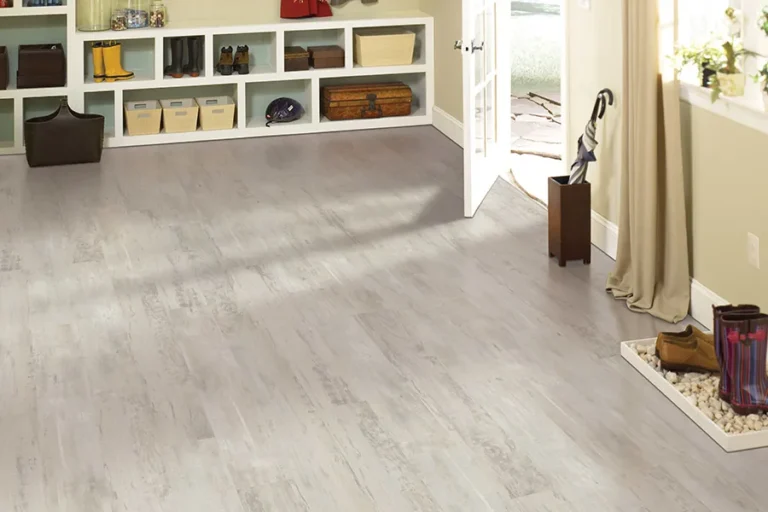
An entry like this one sees wet boots and dripping umbrellas, and that kind of water is what a waterproof plank is built for. Floodwater is a different event, which is why the list above matters as much as the plank you pick.
A flood-zone flooring checklist to print
- Look up your flood zone on FEMA’s Flood Map Service Center.
- New construction or a substantial improvement in a Special Flood Hazard Area? Floors below the base flood elevation come from FEMA’s acceptable list (Technical Bulletin 2, Table 2).
- Read the waterproof claim in the warranty, exclusions included, before you buy.
- On a slab at or below grade, lay 6-mil polyethylene under floating SPC, seams taped.
- Install cabinets and islands first; floor around them.
- Fasten moldings to the wall, not the floor.
- Choose floating where you can; glue down only where rolling loads or heavy objects require it.
- Store one or more spare cartons, the receipt and the installation instructions somewhere that stays dry.
- Keep laminate and wood floors, which FEMA rates unacceptable, for levels that stay dry.
What decides the price of a flood-ready floor
A ground-floor quote moves with these factors:
- The floor type (and, for SPC, the line, wear layer and plank size) and the square footage, plus waste and spare cartons.
- Removing the existing floor and preparing the slab or subfloor to the flatness the manufacturer requires.
- Poly, tape, moldings and transitions, and any areas that must be glued down.
- Whether cabinets or built-ins have to be worked around or reset.
If your floor falls under FEMA’s rule, ask your builder about the acceptable materials above.
If it doesn’t, our SPC lines, including the One Plus Collection with its 22-mil wear layer, are available through both our North Charleston and Richmond showrooms. Bring a photo of the room and your flood zone, and browse the waterproof flooring we stock for ground floors before you visit.
Sources: FEMA Technical Bulletin 2, Flood Damage-Resistant Materials Requirements (January 22, 2025); NOAA National Hurricane Center, tropical cyclone climatology; 44 CFR 60.3; FEMA flood maps and glossary (links above); PermShield warranty and installation instructions (rev. 09/01/2023); Chesapeake laminate warranty, laminate installation guidelines and engineered hardwood warranty (rev. 6/1/2025).
0 Comments