

SPC and WPC are two ways of building the rigid core that sits under a vinyl plank’s printed surface and clear wear layer.
SPC stands for stone plastic composite (some makers say stone polymer core): limestone powder bound with PVC. WPC is usually described as a polymer core blended with wood fiber or wood flour, and it is built thicker.
The short answer to SPC vs WPC flooring: pick SPC for a room that swings in temperature, because among the documents we read only the SPC manual sets written limits for sunrooms, or when you want a thin, dense plank.
Consider WPC when a thicker, softer plank in a climate-controlled room matters more. Rolling chairs and concrete slabs work with either core under its manual. The core does not change how well the surface resists wear.
SPC and WPC, defined by what’s inside the core
The industry standard for this family of floors, ASTM F3261 (2020 edition), describes the product by its layers: a printed design protected by a clear wear layer, on a rigid polymeric core, with or without an attached underlay. SPC and WPC are two recipes for that core.
Congoleum, which writes about both types, describes the SPC core as limestone powder, polyvinyl chloride and stabilizers, and the WPC core as wood fibers or wood flour combined with thermoplastics such as PVC or polyethylene. It credits WPC with a slightly softer feel and SPC with more stability when temperatures change.
One detail catches shoppers off guard. COREtec’s own specification sheets print the acronym as “Waterproof Polymer Core (WPC)”, not wood plastic composite. So read the line that describes the core, not just the three letters on the box.
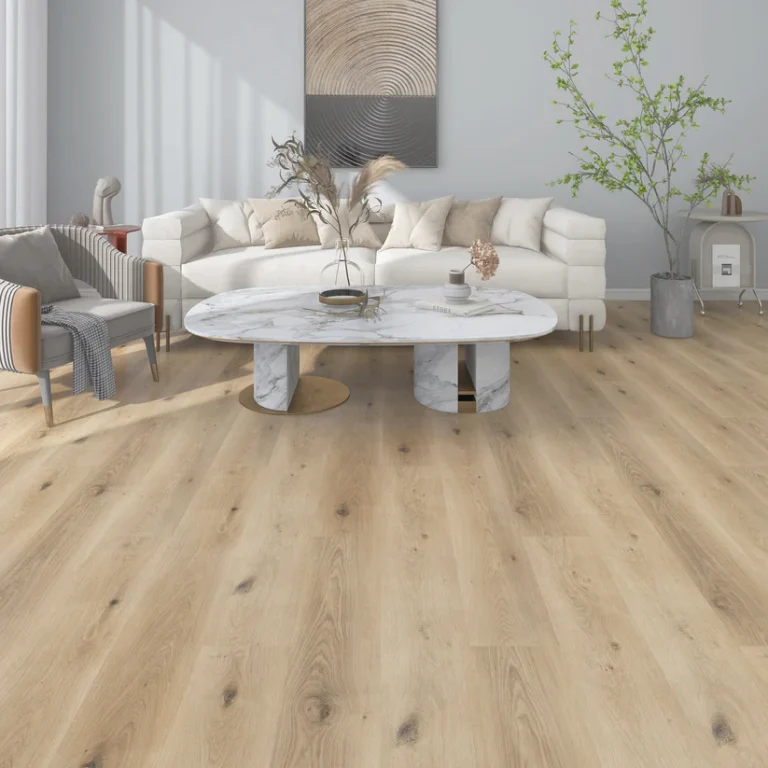
Every vinyl plank we list on our SPC luxury vinyl plank page for North Charleston and Richmond uses an SPC core, so the comparison below puts our own lines next to two published WPC spec sheets.
Real spec sheets side by side
We pulled the numbers from our product pages and from two COREtec Plus specification sheets dated July 1, 2019 (Plank HD and Premium 9″). Where a sheet doesn’t list a value, the table says so instead of guessing.
| PermShield One Plus (SPC) | PermShield Lite (SPC) | Belocore SPC | COREtec Plus Plank HD (WPC) | COREtec Plus Premium 9″ (WPC) | |
|---|---|---|---|---|---|
| Core as printed by the maker | SPC | SPC | SPC | Waterproof Polymer Core (WPC) | Waterproof Polymer Core (WPC) |
| Overall thickness | Not listed on our product page | Not listed on our product page | 4.4 mm | 0.334 in (8.5 mm) | 0.472 in (12 mm) |
| Wear layer | 22 mil | 20 mil | 12 mil | 20 mil (measured per ASTM F410) | 20 mil (measured per ASTM F410) |
| Attached pad | 1.5 mm IXPE | 1 mm IXPE | 1 mm IXPE | Not listed on the sheet | Not listed on the sheet |
| Installation | Floating; glued where rolling loads or heavy objects sit | Floating; glued where rolling loads or heavy objects sit | Ask for the manufacturer’s sheet | Floating or direct glue | Floating or direct glue |
| Warranty wording | Lifetime residential; 15 years light commercial | Lifetime residential; 10 years light commercial | Ask for the warranty document | Lifetime; 10 years medium commercial | Lifetime; 10 years medium commercial |
Two things stand out. The WPC planks are roughly two to nearly three times as thick as the 4.4 mm Belocore plank. And the wear layers overlap: a 20 mil SPC and a 20 mil WPC carry the same clear top layer, measured the same way. See the One Plus and Belocore Latte pages for the full specs.
Pick the core by answering four questions
Start at the first question that applies to your room. The answers come from the installation manual and warranty of the SPC lines we stock, plus the published WPC sheets above.
Is it a sunroom, porch room or seasonal cottage?
If yes, SPC is the core with written rules for it. PermShield’s installation instructions (revised September 1, 2023) allow its planks in fully enclosed three-season rooms, sunrooms and seasonal cottages. Unoccupied, the space may range from -20°F to 176°F.
While people use the room, keep it between 55°F and 95°F. That is the warranty’s figure; the manual allows up to 100°F, so plan around the lower number. The WPC sheets we read don’t state a temperature range, so ask for that product’s manual before you plan a sunroom around it.
Will chairs roll or something very heavy sit on it?
Either core works, but the method changes. PermShield requires its SPC to be glued to the subfloor wherever rolling casters, movable racks or wheelchairs will travel, and under very heavy objects such as safes, because a heavy load can pin a floating floor and open the seams.
COREtec lists direct glue as one of its two installation methods. In a home office, plan the glue-down area before you order adhesive.
Is softness and quiet the priority?
If you want the plank itself to feel cushioned, a thicker WPC is the honest argument for WPC.
Don’t try to turn a thin SPC into one by stacking pads. PermShield allows a second underlayment under its padded planks only if the combined thickness stays at 3 mm or less, and says lab sound testing so far shows no added acoustic benefit from that second layer.
We explain the pad rules in detail in our guide to underlayment for vinyl plank flooring.
Is the floor going over a concrete slab?
Both cores can float over concrete; follow each manual’s moisture limits and plastic-sheet rules. PermShield also notes that a concrete floor can run up to 10°F colder than the room, a reason some owners like the attached pad.
The slab’s moisture numbers decide more than the core does; we compare those limits in our article on the best flooring for a concrete slab.
What the core does not decide
The core does not set how long the surface lasts. Wear is about the clear top layer, and the PermShield warranty defines it narrowly. PermShield counts wear only when it goes through the wear layer far enough to change the printed pattern; surface scratches and loss of gloss are treated as normal wear.
“Waterproof” also needs care with either core. PermShield’s warranty covers water from above and states that luxury vinyl plank is not a moisture barrier: water that runs between planks to the subfloor, flooding and plumbing leaks are excluded. We cover that fine print in waterproof vs. water-resistant flooring.
Where WPC shows up in our catalog
All 21 vinyl plank products on our site are SPC: 13 PermShield One Plus colors, 5 PermShield Lite colors and 3 Belocore colors. WPC appears in our catalog only on walls: our four exterior Belocore slat panels are sold as a WPC line and listed as wood composite.
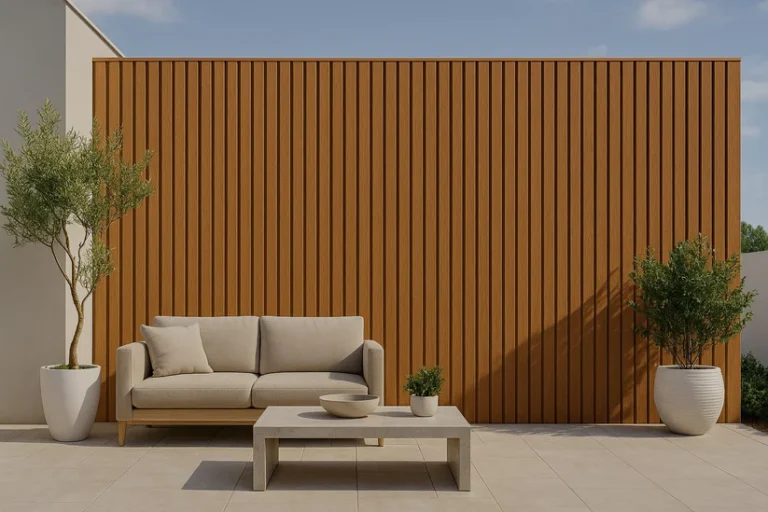
That’s where a wood-polymer composite earns its keep for us: WPC exterior slat panels on patios and porch walls, while the floors inside stay SPC.
What moves the price of either one
Prices change too often to print, so here is what a quote is built from:
- The line and its specs: wear layer, overall thickness and whether a pad is attached.
- Square footage plus cutting waste, which grows in rooms with many angles.
- Installation method: floating, or glue-down with adhesive where chairs roll or heavy furniture sits.
- Subfloor work: leveling, moisture testing and 6-mil poly over concrete.
- Moldings and transitions at doorways and stairs.
If an SPC core fits your answers, compare our SPC vinyl plank lines and bring your room sizes to the North Charleston or Richmond showroom for a quote.
Sources: PermShield rigid core installation instructions and luxury vinyl flooring warranty (both revised September 1, 2023); COREtec Plus Plank HD and COREtec Plus Premium 9″ specification sheets (USFloors, July 1, 2019); Congoleum, “SPC & WPC Flooring: Exploring Their Features, Pros and Cons” (June 1, 2023); ASTM F3261-20 scope; specifications on TRD Floor Supplies product pages.


0 Comments